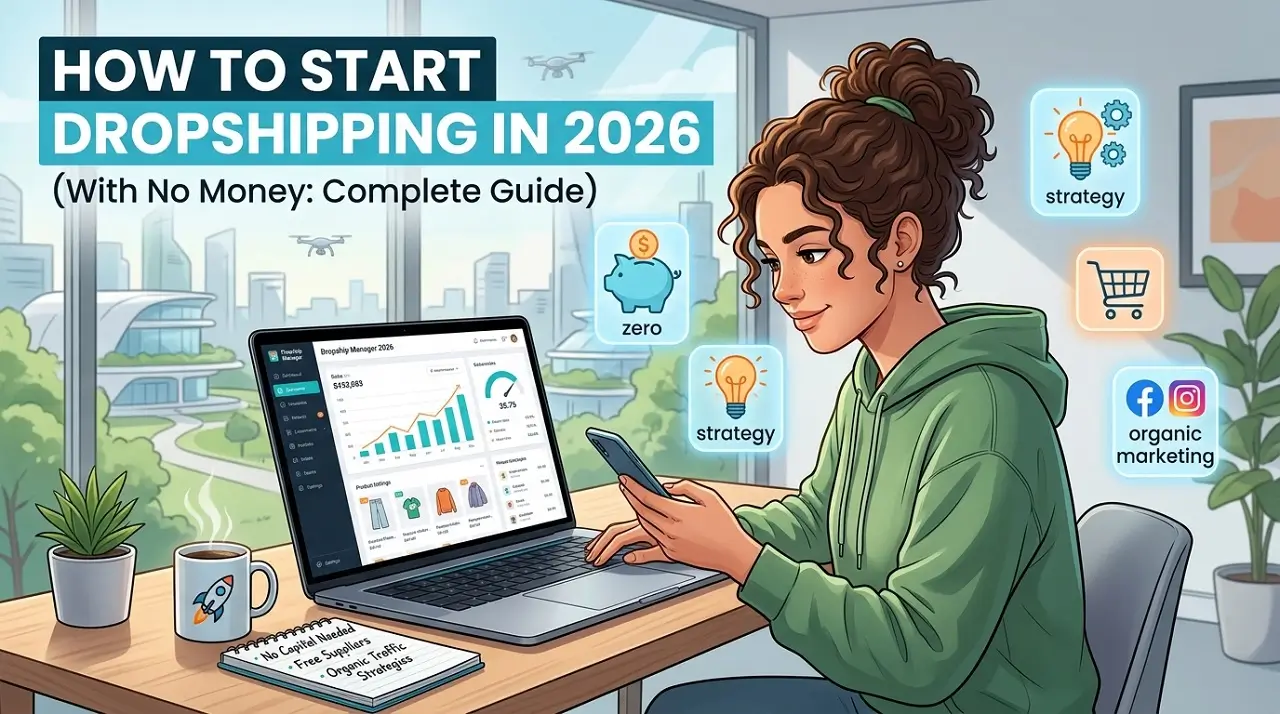
How to Start Dropshipping in 2026 With No Money
Disclosure: This article is for informational purposes only. We do not use affiliate links and earn no commission from any platforms or services mentioned.
Last Updated: June 2026. Platform features, pricing, and supplier terms can change. Always verify current details directly on each platform’s official website before making decisions.
The idea of starting an online business with zero investment sounds like the kind of promise that belongs in an ad, not in a genuine guide. But dropshipping in 2026 is genuinely one of the few business models where starting with little to no upfront money is possible — not because it is easy, but because the structure of the model itself removes the biggest traditional costs of retail: inventory, storage, and upfront stock purchases.
That said, being honest matters here. Starting with no money means trading capital for time and effort. Results take longer, growth is slower, and patience becomes your most valuable resource. If you go in with that understanding, this model is one of the most accessible ways to build a real online business from scratch.
What Dropshipping Actually Is — and Why It Works Without Capital
The core mechanic of dropshipping is simple. You list products in an online store or on a marketplace. When a customer places an order, you forward that order to a supplier who ships the product directly to the buyer. You never purchase inventory upfront and never handle the product yourself. Your profit is the difference between what the customer pays you and what you pay the supplier.
This structure is what makes starting with no money genuinely possible. You are not buying stock in advance. You collect payment from the customer first, then pay the supplier. The financial risk that would normally come with holding inventory simply does not exist in this model.
Step 1 — Choose a Niche Before Anything Else
The single most common mistake beginners make is trying to sell everything to everyone. A general store with random products is harder to market, harder to build an audience around, and harder to rank in search engines.
Choosing a focused niche before you build anything gives your store a clear identity. Research suggests that niches with a passionate audience, consistent demand, and reasonable supplier availability tend to perform better for beginners. Home organization, pet accessories, kitchen tools, outdoor gear, and personal wellness products are areas where demand tends to remain stable rather than spiking around trends.
Use Google Trends to check whether interest in your chosen niche has grown or declined over the past twelve months. Browse AliExpress bestseller lists to see what is actually selling. Spend time on Reddit communities related to your niche to understand what real buyers talk about and what problems they want solved. This research costs nothing and saves enormous amounts of time later.
Step 2 — Find Suppliers Who Charge You Only After a Sale
When starting without money, you need suppliers who do not require upfront payment or minimum order quantities. AliExpress is the most commonly used starting point for this reason — it allows you to list products without any commitment and only requires payment once you have already received an order from a customer.
When evaluating products on AliExpress, look for suppliers with strong ratings and a meaningful number of completed orders. A supplier with a 4.7-star rating and hundreds of fulfilled orders carries significantly less risk than a new listing with no track record. Pay attention to the estimated shipping times for your target market as well, since long delivery windows are one of the most common sources of customer complaints in dropshipping.
eBay, Walmart, and other retail platforms can also serve as supplier sources, though they come with their own limitations and policy considerations. Research each option carefully before building your product listings around any single source.
Step 3 — Set Up a Store Using Free or Trial-Based Platforms
This is where most beginners assume they need money — but several options exist that either offer free plans or extended trials that are long enough to make your first sales before any cost kicks in.
Social media selling is the most genuinely free starting point. Facebook Marketplace, Instagram Shopping, and TikTok Shop all allow you to list and sell products without needing a dedicated website. These platforms already carry large audiences, which removes the immediate need to drive traffic from scratch.
For those who want a dedicated store, Shopify offers a free trial period that gives you enough time to set up, list products, and process early orders. Other platforms offer free tiers with basic functionality. The key is to use whatever you have access to now, prove the model works with real sales, and then reinvest early profits into a proper setup.
Step 4 — Drive Traffic Without Spending on Ads
Paid advertising can accelerate dropshipping results significantly, but it requires money and carries real risk if campaigns are not set up correctly. When starting with no budget, organic traffic channels are your alternative — and in 2026, several of them are genuinely powerful.
TikTok remains one of the most effective zero-cost traffic sources for product-based businesses. Short videos showing a product solving a real problem, demonstrating a use case, or documenting the behind-the-scenes process of a small business tend to perform well without requiring any ad spend. Consistency matters more than production quality here — regular posting builds momentum over time.
Pinterest drives strong search-based traffic for visual product categories. Creating boards around your niche and pinning product images with keyword-rich descriptions is a slow-build strategy, but one that compounds over time without ongoing cost.
SEO through a blog attached to your store is another long-term approach. Writing genuinely helpful content around topics your target buyers search for brings in organic traffic that does not disappear when you stop spending.
What “No Money” Actually Means in Practice
It is worth being direct about one thing. Starting with absolutely zero is possible, but it comes with real limitations. Without any budget, you will be doing everything manually — listing products, processing orders, handling customer communication, and creating content. That takes significant time, and time has a real cost even when money does not.
The more accurate framing is this: starting dropshipping with minimal money is genuinely achievable. Most early costs — a domain name, eventually a paid store plan — are small enough to cover from your first few sales if you treat those early earnings as reinvestment rather than income.
Customer service is one area where cutting corners has real consequences. Dropshipping orders often involve longer shipping times than customers expect from conventional eCommerce. Clear communication about timelines, prompt responses to questions, and honest handling of issues are what separate stores that build repeat customers from those that do not.
The Honest Reality of This Model
Dropshipping in 2026 is not a fast path to passive income. Competition is real, margins on many products are thin, and building a store that generates consistent sales takes genuine effort over months, not days. What the model does offer is a legitimate, low-barrier way to learn eCommerce, test products without financial risk, and build toward a real business.
Starting with no money means starting slowly — and that is fine. The goal in the first 90 days is not profit. It is learning how the process works, understanding your audience, and finding at least one product that real people want to buy. Everything else builds from there.
Frequently Asked Questions
Can you really start dropshipping with zero money? Yes, it is possible using free selling platforms and suppliers who only charge after a sale. However, starting with no money means relying entirely on organic traffic and manual processes, which makes growth slower. Results require patience and consistent daily effort.
How long does it take to make the first sale? This varies significantly depending on niche, platform, product selection, and how consistently you create content and manage your store. Some beginners see their first sale within weeks, while others take two to three months. There is no guaranteed timeline.
Is dropshipping still worth it in 2026? Dropshipping remains a viable business model in 2026, particularly for beginners who want to learn eCommerce without large upfront investment. However, success depends on choosing the right niche, sourcing quality products, and building genuine trust with customers over time. It is not a get-rich-quick model, and approaching it as one is the most common reason people give up too early.
What is the biggest risk with dropshipping? The main risks include unreliable suppliers, long shipping times that frustrate customers, thin profit margins on popular products, and account restrictions on marketplace platforms. Researching suppliers carefully and managing customer expectations honestly reduces most of these risks significantly.
About the Author
This article was researched and written by the ApkBallo editorial team. We regularly analyze digital marketing, eCommerce models, and online business strategies to help readers make informed decisions. Our goal is to publish accurate, practical content that reflects the real experience of building an online business — not an idealized version of it.