How Affiliate Marketing Actually Works in 2026
I have spent a good amount of time researching affiliate marketing this year, and I want to share something honest with you—the way this industry works in 2026 is genuinely different from what most beginner guides still teach. The fundamentals are the same, but the execution, the tools, the tracking, and the expectations have shifted quite a bit. If you are starting out or trying to improve your results, understanding the current reality is more useful than following outdated advice.
Let me walk you through how affiliate marketing actually works right now, from the basic structure to the strategies that are producing real results in mid-2026.
The Basic Model Has Not Changed — But Everything Around It Has
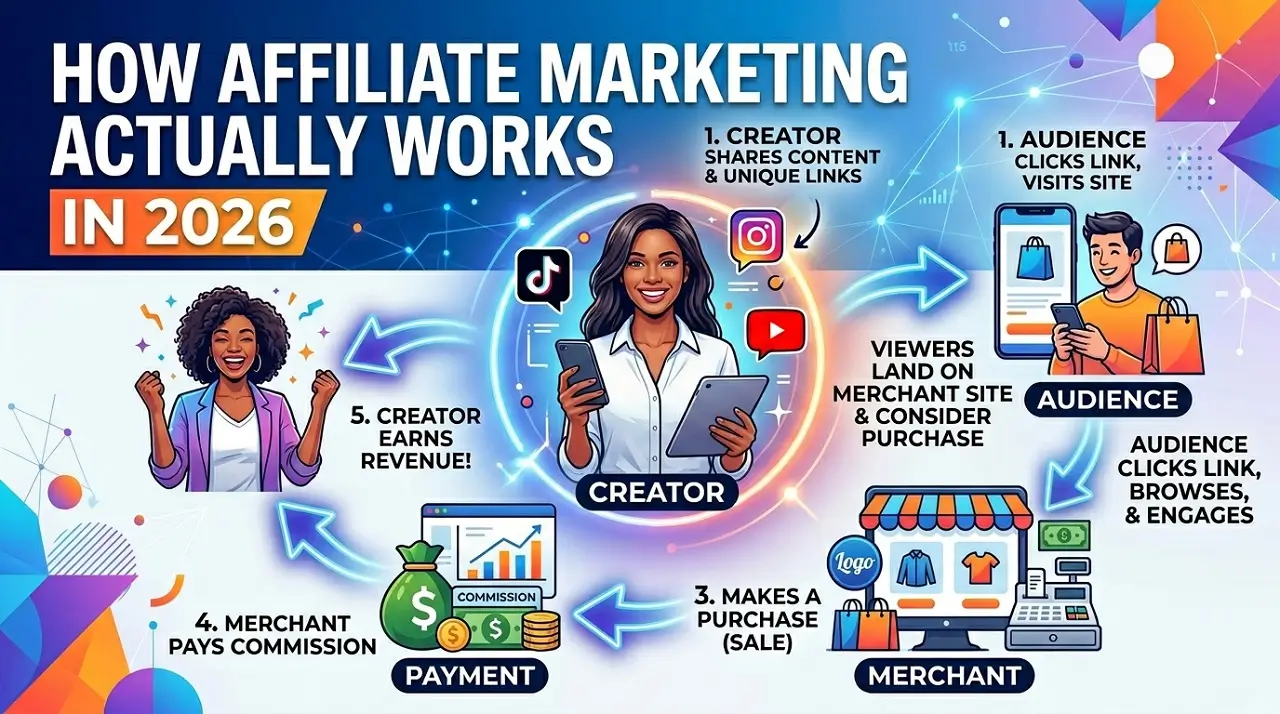
At its core, affiliate marketing is still a performance-based arrangement. A brand or merchant runs a product or service. You, as a publisher or content creator, promote that product using a unique tracking link. When someone clicks your link and completes a defined action — usually a purchase, but sometimes a signup or a form submission — you earn a commission. Simple enough.
What has changed is how that tracking link works, how commissions are structured, and what kind of content actually gets people to click and convert. These three things are where most beginners get stuck and where experienced affiliates are pulling ahead.
On the tracking side, the industry has largely moved away from third-party cookie-based attribution. Browser restrictions and growing privacy regulations made that model unreliable. In 2026, most serious affiliate networks now use first-party data tracking and server-side attribution. What this means for you practically is that your links are more accurate than before, but you also need to work with networks that have invested in this infrastructure, because older setups will undercount your conversions.
The Commission Structures You Need to Understand
Not every affiliate program pays the same way, and choosing the right structure for your content style matters more than most people realize.
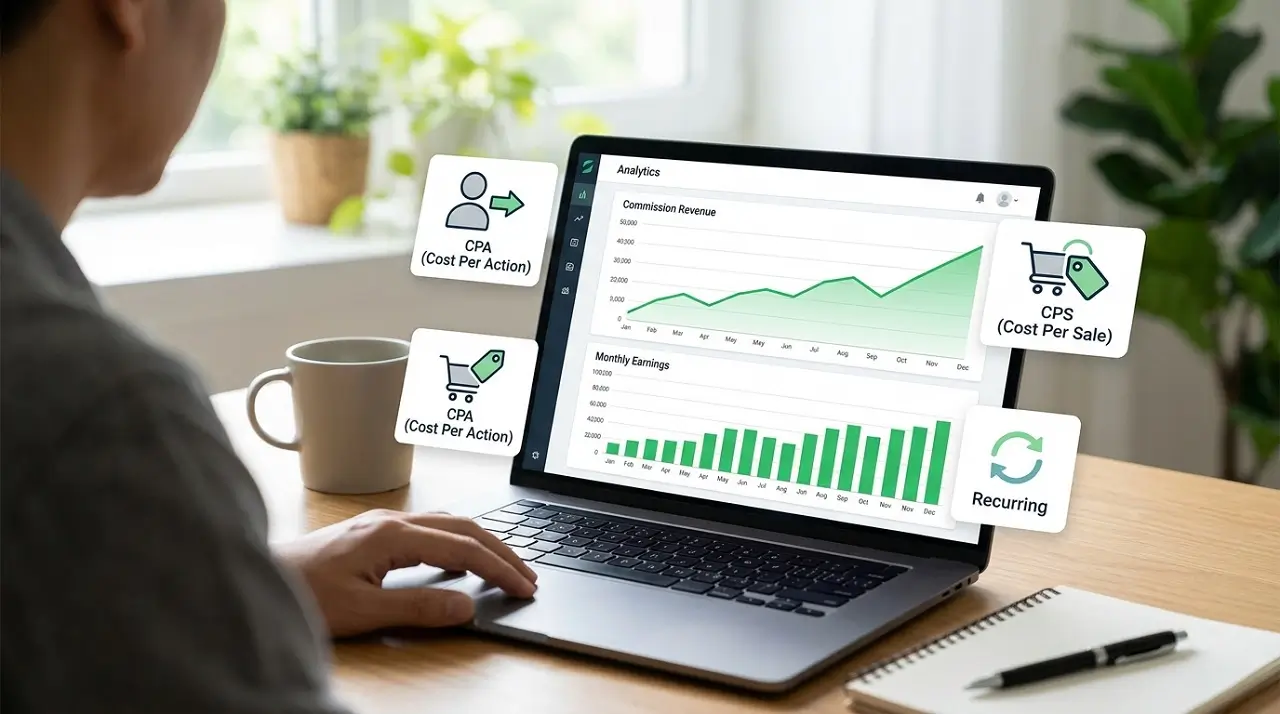
The most common model is Cost Per Sale, where you earn a percentage of a completed purchase. This is what Amazon Associates uses, and it is what most eCommerce affiliate programs offer. Commission rates here typically range from 3% to 20% depending on the category.
Then there is the cost per action model, which pays you when a user completes a specific action like signing up for a free trial or filling out a form. SaaS companies and financial services brands lean heavily on this model, and payouts can range anywhere from a few dollars to over a hundred dollars per lead depending on the product.
Recurring commissions are a third structure worth knowing. Software-as-a-service programs—tools like email marketing platforms, SEO tools, and website builders—often pay you a percentage of the subscription fee every single month for as long as the customer you referred stays subscribed. This is where real passive income starts to build, because one referral keeps paying you for months or even years.
Hybrid models are also becoming more common in 2026, where brands pay you a small upfront fee for the lead and then an ongoing commission on retained customers. This aligns the incentives well and rewards affiliates who send quality traffic rather than just volume.
What Kind of Content Is Actually Converting in 2026
This is the part that has shifted the most. Lazy affiliate content — thin product reviews, generic comparison lists, and keyword-stuffed buying guides — simply does not perform the way it once did. Google’s algorithm updates over the past two years have pushed down content that lacks depth, real experience, and genuine usefulness.
What works now is content that demonstrates real familiarity with the product. If you are reviewing a tool, you need to have used it. If you are writing a comparison, your reader should be able to tell that you actually understand the difference between the options. Video content continues to grow in importance too—YouTube, TikTok, and Instagram Reels are driving significant affiliate sales in 2026, partly because video builds trust in a way that text alone often cannot.
Long-form written content is also making a strong comeback. Short posts under 600 words are struggling to rank or convert. Detailed, well-structured articles that genuinely help the reader make a decision are outperforming everything else in most niches. This is actually an advantage for bloggers who are willing to put in the research.
At ApkBallo, for example, publishing thorough, well-researched content in a focused niche is exactly the kind of approach that earns reader trust—and reader trust is what makes affiliate links actually get clicked.
Choosing the Right Affiliate Programs
Program selection is where a lot of beginners make mistakes. The instinct is to join the biggest programs—Amazon Associates being the first stop for most people. Amazon is a legitimate starting point because the brand recognition leads to decent conversion rates, but the commission rates are among the lowest in the industry, often falling between 1% and 4% for many categories.
For better earnings per click, most experienced affiliates focus on programs in niches with higher margins — SaaS products, finance tools, online education platforms, hosting companies, and digital services. These programs regularly offer commissions in the 20% to 50% range, and many offer recurring payments.
When evaluating a program, look at four things: the commission rate, the cookie duration (how long after clicking your link a purchase still credits to you), the average order value of the product, and the conversion rate of the merchant’s own landing page. A 50% commission on a product that nobody buys is worth less than a 10% commission on something with a high conversion rate and a strong brand.
Affiliate networks like ShareASale, Impact, CJ Affiliate, and Awin host thousands of programs across nearly every niche, making them useful places to browse and compare options rather than hunting down individual programs one by one.
The Role of AI in Affiliate Marketing Right Now
It would be incomplete to talk about affiliate marketing in 2026 without mentioning how AI has changed day-to-day workflows. US affiliate spending is projected to reach $13.81 billion this year, and a significant part of that growth is being driven by affiliates who are using AI tools to work more efficiently.
AI is being used for keyword research, content drafting, conversion funnel analysis, and even identifying which affiliate products are trending before they become saturated. Predictive analytics tools help affiliates understand user intent at a deeper level, which leads to better content targeting and higher earnings per visitor.
That said, the human element is still irreplaceable. AI can help you produce more, but it cannot replace genuine expertise, authentic recommendations, or the trust you build with an audience over time. The affiliates seeing the best results right now are using AI as a research and efficiency tool while keeping their voice and their judgment at the center of their content.
Building a Sustainable Affiliate Income
One of the biggest misconceptions about affiliate marketing is that it produces fast results. It can, in some cases, but building a sustainable income almost always takes time. The affiliates who earn consistently are the ones who picked a focused niche, built real expertise in it, and published content consistently over months and years.
Diversification matters too. Relying on a single traffic source — just Google, just TikTok, just Pinterest — creates real vulnerability. Algorithm changes happen without warning, and they can cut traffic significantly overnight. Building an email list alongside your main content channel gives you a direct line to your audience that no platform can take away.
At ApkBallo, the approach is to build content that serves real readers—people who actually want to understand a topic or make an informed decision—rather than producing thin content just to fill pages. That reader-first approach is what Google rewards now, and it is what converts visitors into buyers in affiliate marketing.
Final Thoughts
Affiliate marketing in 2026 is not a shortcut to income, but it is a legitimate and growing channel for people willing to build it properly. The industry is worth billions globally, the commission structures have become more sophisticated, and the tools available to affiliates are better than ever. What the market is also less forgiving of than ever before is low-quality, generic content that does not help anyone.
If you take one thing away from this, let it be this: affiliate income follows audience trust, and audience trust follows genuine helpfulness. Get those two things right, and the commissions tend to follow.