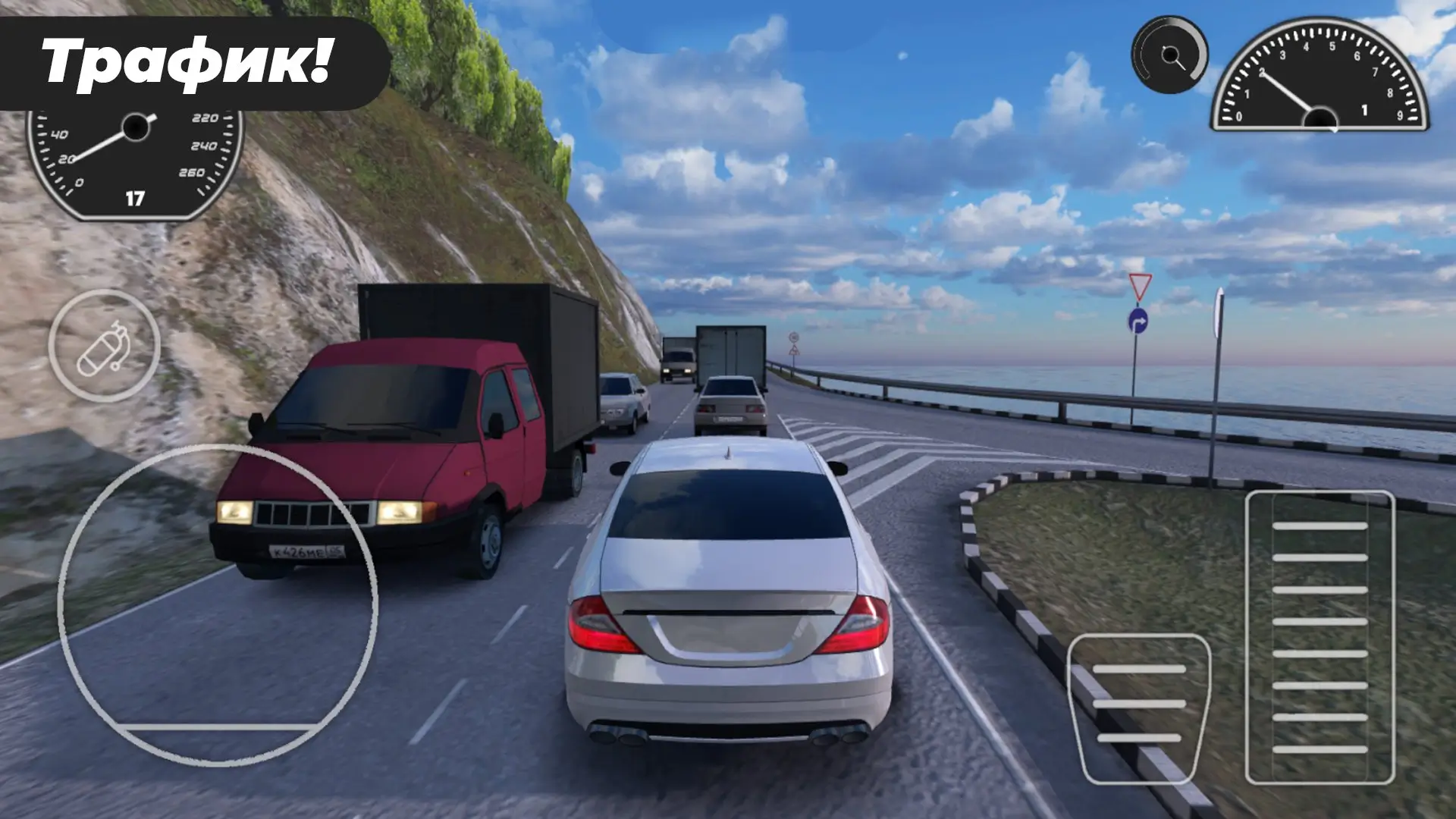
Caucasus Parking: Why This Game Is So Popular
Over 5 million players have downloaded a parking game. Not a battle royale. Not an open-world RPG. A parking game. That alone should make you stop and wonder — what on earth is going on with Caucasus Parking?
If you’ve seen it popping up on your social feed or heard friends talking about it, you’re not imagining things. The Caucasus Parking game has quietly become one of the most talked-about mobile simulators on Android. It doesn’t rely on flashy marketing or viral gimmicks. It earns its reputation the old-fashioned way — through genuinely satisfying gameplay that keeps people coming back.
This article breaks down exactly what makes Caucasus Parking so addictive, what sets it apart from the dozens of parking games already out there, and whether it’s worth your time.
What Exactly Is Caucasus Parking?
Caucasus Parking is a 3D car parking simulator developed by MISHIKinc and released in late 2022. The concept sounds simple on paper — find the green marker, park your car front-first. But anyone who’s actually played it knows it’s far from a casual tap-and-swipe experience.
The game is set entirely in Russia, specifically drawing inspiration from the towns, streets, and culture of the Caucasus region. Think Sochi, Makhachkala, Grozny, and Derbent — real places with distinct architectural character, recreated with surprising detail. That geographic specificity isn’t just cosmetic. It gives the game a personality most simulators simply don’t have.
What started as a niche title for fans of Russian car culture has evolved into something much bigger. The developer built something that felt personal and authentic, and players from all over the world responded to that honesty.
The Gameplay Loop That Keeps You Hooked
Here’s what a typical session looks like: you spawn at a random location somewhere on the map, scan for the green marker indicating your target parking spot, then navigate through tight streets, parked vehicles, and real-world obstacles to get there.
Sounds manageable, right? It is — until it isn’t. The parking game levels escalate gradually, demanding more precise control with each new stage. You’re not just memorizing patterns. You’re developing actual spatial awareness and vehicle control instincts.
What makes the loop work so well is that there’s no arbitrary time limit breathing down your neck. You can take your time, ease into the spot carefully, correct your angle mid-manoeuvre. That patience-rewarding design philosophy is rare in mobile gaming, where most titles try to pressure you into making mistakes.
- You spawn at a random map location every level
- Locate the green-marked parking space
- Navigate traffic, obstacles, and tight urban gaps
- Park front-first without hitting anything
- Progress unlocks new cars and map areas
Also Read: Experiencing Extreme Car Driving Simulator – My Honest Review
Realistic Physics: The Secret Ingredient
Most mobile car games handle physics like an afterthought. Caucasus Parking treats it like the entire point.
The realistic car physics in this game mean that how you accelerate, brake, and steer actually behaves like a vehicle responding to the road. Wind resistance affects speed at higher velocities. Weight transfer is noticeable when cornering. Different cars genuinely handle differently — a heavy LADA isn’t going to feel like an Audi, and the game makes sure you feel that distinction.
💡 Pro Tip: If you’re struggling with tight parking spots, switch to the in-car camera view. The shift in perspective replicates how real drivers judge distance and angles, and a lot of players report a sudden jump in accuracy after making that change.
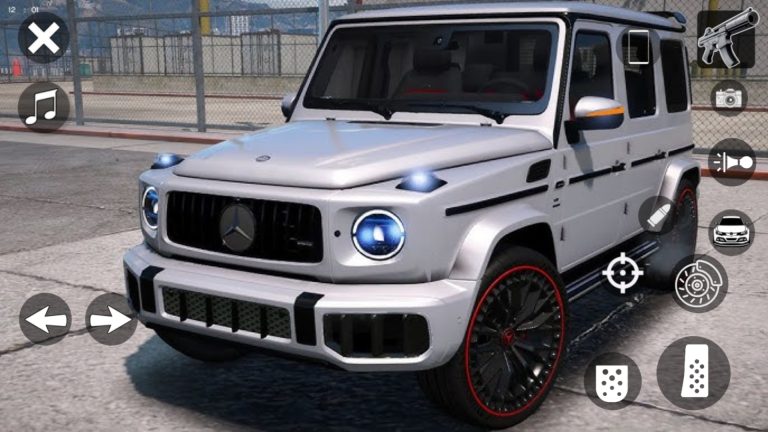
The control system itself gives you three options to choose from: on-screen arrow buttons for traditional play, a steering wheel overlay for a more immersive feel, or accelerometer tilt controls for those who like using their phone’s gyroscope. That flexibility means you’re never fighting against the controls — you’re playing on your terms.
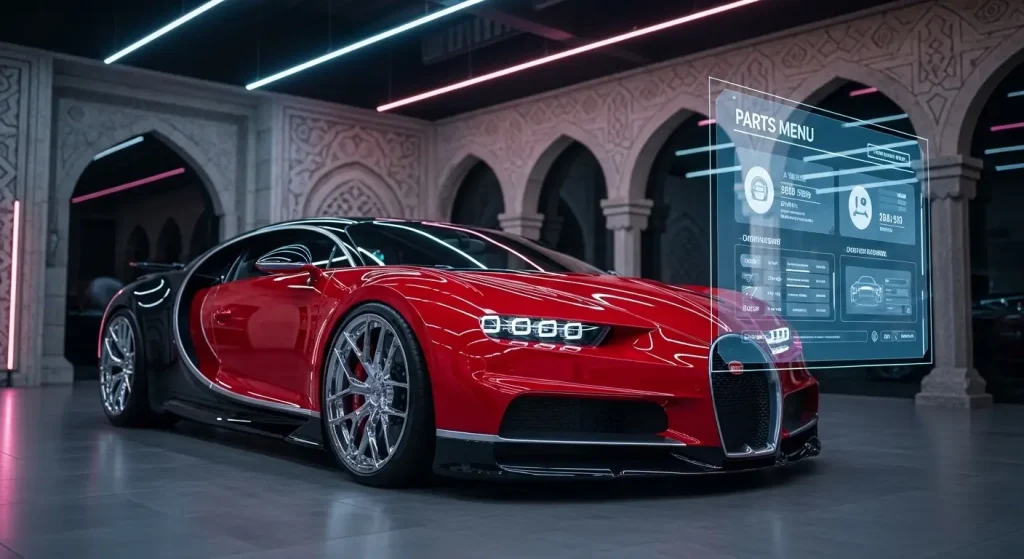
The Car Collection — It’s Not Just About Parking
Let’s be honest — half the reason people play this game is the cars. Caucasus Parking features over 20 vehicles drawn from real-world brands, and the range is genuinely impressive.
On the accessible end, you’ve got classic LADA models that feel right at home on southern Russian streets. Move up and you’ll find BMW, Mercedes, Audi, and Nissan. Keep going and things get interesting — Bugatti and Aston Martin are both in the roster, alongside a special investigative committee vehicle that lets you play out your inner detective fantasy.
Every car is fully customizable. You can:
- Change the exterior colour to something fresh or something subtle
- Adjust wheel size, height, and width
- Modify suspension tilt for aggressive styling
- Choose rim designs that match your build
The customization isn’t just cosmetic vanity (well, mostly). Different builds affect how your car sits and handles, which means tinkering with your setup actually impacts your parking performance. That’s the kind of depth that keeps players engaged for weeks, not days.
Three Game Modes, One Obsession
One reason the Caucasus Parking gameplay doesn’t get stale is that the game doesn’t lock you into a single way to play. There are three distinct modes, each offering a completely different experience.
Parking Mode
This is the core of the game — the 104 levels of progressively harder parking challenges. You start in front of your garage, drive to find spots scattered across the map, and park precisely within the green boundary markers. Early levels are forgiving. Later ones will genuinely test your patience and spatial reasoning.
Free Mode
Free Mode is the open-world sandbox that lets you just be in the game. Explore underground tunnels, cruise along beach highways, wind through mountain roads. There are no objectives, no timers, no failure states. It’s just you, the car, and the Caucasus. Players use this mode to unwind, experiment with new vehicles, and enjoy the scenery — which is genuinely beautiful.
Rank Mode
Rank Mode throws you into traffic-heavy roads with obstacles and other vehicles competing for space. It’s the pressure test. Your ranking reflects your performance, adding a competitive edge for players who want more than just personal satisfaction.
📌 Quick Fact: Caucasus Parking hit over 5 million downloads in under two years from its late 2022 release — an unusual milestone for a niche simulation game without major publisher backing.
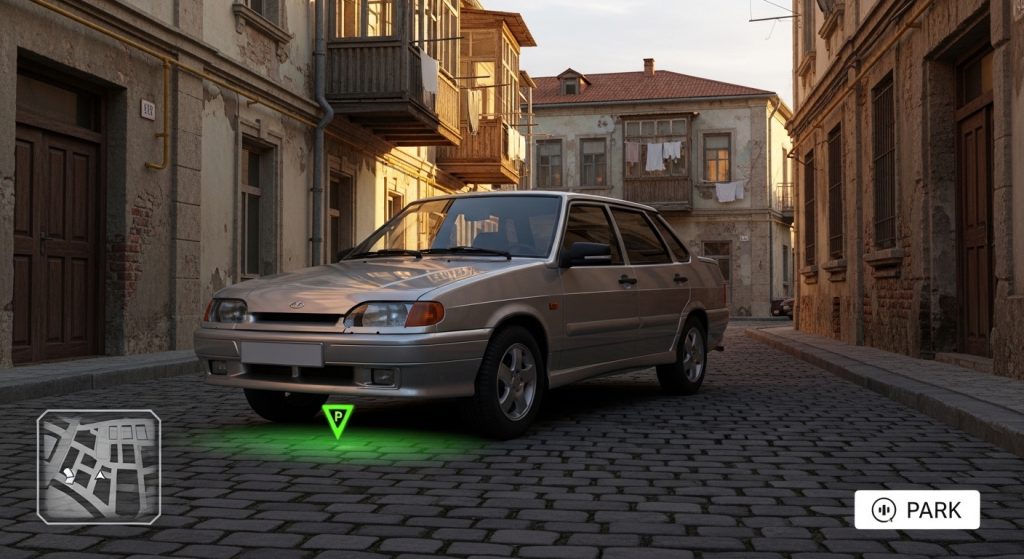
The World It’s Built In Makes All the Difference
You can’t talk about why the Caucasus Parking game is so popular without acknowledging the setting. The developer didn’t just design “generic city streets.” They recreated specific places — Krasnodar, Sochi, Makhachkala, Derbent, Grozny — with recognizable architectural traits and regional character.
For players from those areas, it’s a rare moment of cultural representation in gaming. Seeing your hometown rendered in a 3D simulator — complete with the right kind of buildings, road layouts, and general vibe — is genuinely meaningful. That emotional connection drives engagement in ways that gameplay mechanics alone can’t.
For players who aren’t from the region, the setting provides something equally valuable: novelty. Most driving simulators are set in bland western European or American environments. The Caucasus feels different — vibrant, warm, a little chaotic in the best way. It’s a refreshing change of scenery.
The combination of authenticity for locals and discovery for everyone else is a clever formula. Whether you recognize the streets or not, the world feels lived in. And that quality is what separates memorable games from forgettable ones.
Frequently Asked Questions
Q: What is Caucasus Parking? A: Caucasus Parking is a 3D car parking simulator developed by MISHIKinc and released in late 2022. It’s set across the cities and streets of the Caucasus region of southern Russia, featuring over 20 customizable cars, 104 parking levels, and three distinct game modes including free roam and ranked play. It’s available on Android and has accumulated over 5 million downloads.
Q: Why is Caucasus Parking so popular? A: Several factors come together — realistic car physics, a genuinely unique setting, a satisfying gameplay loop with no artificial time pressure, and a strong car customization system. It also fills a gap in the market: most mobile driving games are either too arcade-y or too bland in their settings. Caucasus Parking has personality, and that’s surprisingly rare.
Q: What cars are available in Caucasus Parking? A: The game features over 20 vehicles from well-known brands including LADA, BMW, Mercedes, Audi, and Nissan. On the premium end, you’ll find Bugatti and Aston Martin. There’s also a special investigative committee vehicle. All cars can be customized with different colours, wheels, and suspension setups.
Q: How many levels does Caucasus Parking have? A: The Parking Mode includes 104 levels that gradually increase in difficulty. Levels range from straightforward urban parking spots to complex tight-space challenges with obstacles and other vehicles. Beyond structured levels, Free Mode and Rank Mode add essentially unlimited replayability.
Q: Is Caucasus Parking realistic? A: By mobile game standards, yes — it’s among the more realistic options available. The game simulates actual vehicle weight, speed dynamics, wind resistance, and turning behaviour. Different cars handle noticeably differently, and the three control schemes (arrows, steering wheel, accelerometer) all support a grounded driving feel rather than arcade-style gliding.
Final Thoughts
Caucasus Parking proves something important: you don’t need a massive budget, a famous IP, or viral marketing to build something millions of people love. You need a clear idea, honest execution, and enough respect for your players to make the physics actually matter. The Caucasus Parking game gets all three right — and that’s why it keeps growing while flashier titles fade out.
If you’ve tried it, drop a comment below and let others know what mode you spend the most time in. And if you found this breakdown useful, share it with a fellow gaming fan who’s looking for their next obsession.