EV Models Coming to the USA Between 2026 and 2030
The United States is currently witnessing a strong transformation phase for EV Models.
From 2026 to 2030, the world’s leading manufacturers will offer their most EV Models.
Such cars will be equipped with various features such as better range, software, quick charging, and so on. The shift toEV Models is being pushed by government incentives alongside the ever-increasing consumer demand.
Car manufacturers are pouring billions into battery technology and production plants. Such an outlay will not only guarantee exceptional performance but also make the operation of the vehicle less expensive for the consumer.
The future EVs will be multi-purpose, i.e., they will cater to all kinds of users: families, commuters, and performance enthusiasts. The next five years will bring a total change in the American automotive market.
Why 2026–2030 Is a Critical EV Period
Strong Government Support
The federal government incentives are going to help EV Models across the country.
The tax credits and rebates offered by the states will make the new EV Models considerably cheaper.
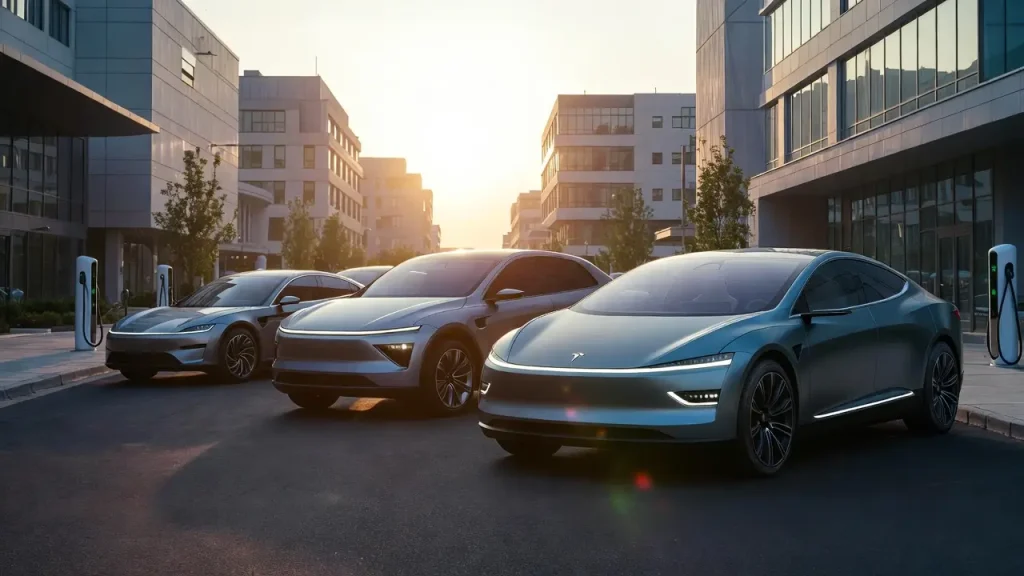
The charging infrastructure, which is going to be expanded, will take out the fear of running out of battery for the new users.
The public charging stations will be installed more efficiently, covering the highways as well as the countryside.
Battery Technology Breakthroughs
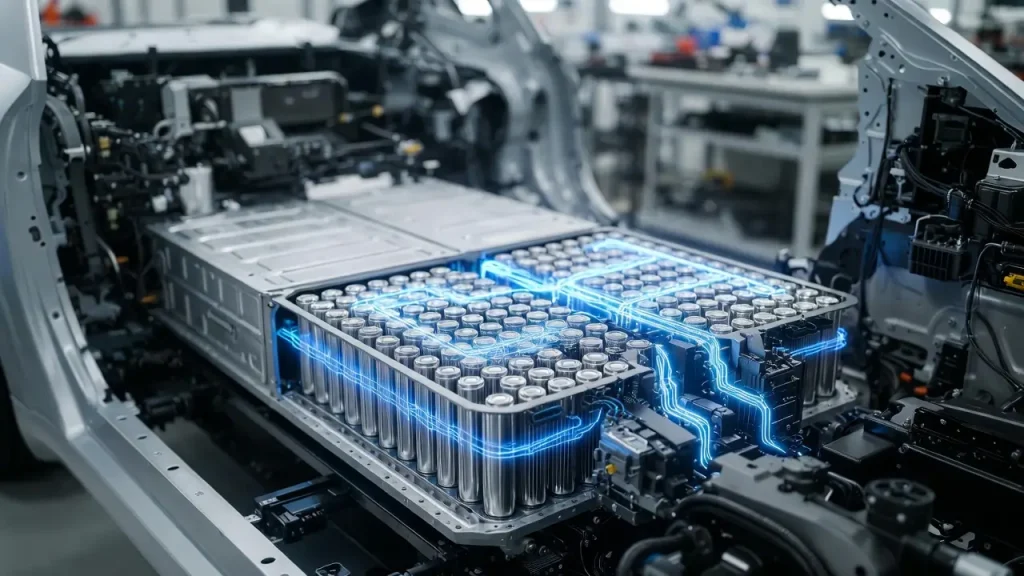
The manufacturing of solid-state batteries might start on a small scale at this time.
The advantages of these batteries include quicker charging and better energy density.
Iron phosphate batteries will be used in the production of lower-cost EV Models.
Waste programs will be more effective in achieving their sustainability across the battery manufacturers.
Also Read: Best Electric Cars Under $30,000 in the USA
Major Automakers Launching EVs
Tesla Future Models
Between 2026 and 2030, Tesla’s vision includes not only refreshed but also new models. Tesla is anticipated to present a compact and budget-friendly car aimed at the mass market. Cybertruck editions could possibly get the upgrades of better range and efficiency. Tesla’s software updates will be a continuing factor in the value enhancement of the vehicle’s lifespan.
Ford Electric Roadmap
Ford is going to increase its variety of electric trucks and SUVs.
The electric next-generation F-Series trucks are being developed actively.
Ford aspires to have superior hauling distance and reduced power replenishing time.
Cheap electrified crossovers will be aimed at average American households.
General Motors EV Plans
GM is going to utilize its Ultium battery technology in all of its brands.
Chevrolet is thinking of making affordable EV Models and small SUVs.
Cadillac will be all about the luxury EV Models.
GM’s aim is to make money by using the already available and easy-to-scale EV production techniques.
Asian Brands Entering the US Market
Hyundai and Kia
Hyundai will introduce next-generation electric sedans and SUVs.
Kia imagines high-tech designs along with pricing strategies that are still competitive.
The two automakers are going to concentrate on super-speedy charging systems.
Interiors will be equipped with state-of-the-art technology, while security systems will be upgraded to the highest levels.
Toyota Electric Comeback
Toyota is going to launch several EV Models in the US market.
The new EV Models platforms will totally take over the previous limited electric offerings.
Toyota stresses its reliability and long-lasting battery life.
A gradual hybrid-to-EV shift will still be very customer-friendly for the loyal ones.
Honda and Nissan
Honda is going for stylish electric sedans as well as roomy SUVs for families.
Nissan is going to distribute the Leaf and enter several segments.
Collaboration will make a huge impact on the developers’ costs and will be the way to quick launches.
Both manufacturers are talking about the same things: price and effectiveness.
European Brands Expanding EV Presence
Volkswagen Group
Volkswagen is going to offer budget-friendly electric hatchbacks and SUVs.
Audi will launch luxury electric sedans and power-driven cars.
Porsche keeps on broadening the range of super-fast electric sports cars.
The concept of software-defined cars will turn into one of the main strategies of VW.
BMW and Mercedes-Benz
BMW is redirecting its resources towards electric sedans and crossovers with sporty characteristics.
Mercedes-Benz is positioning its brand around luxury, comfort, and self-driving technologies.
Highly sophisticated driver aid systems will be available as a matter of course.
The premium segment of the American market will be the main target for European EVs.
Also Read: How to Charge Your Electric Car at Home Safely
Expected EV Body Types
Electric Sedans
EV Models sedans are going to be the long-distance and most energetic vehicles.
They have been designed for daily commuters and ride-sharing fleets.
The lower position of the car body enhances the performance and security.
Midsize cars are still the preferred choice for people living in cities and suburbs.
Electric SUVs
Today, SUVs are the most preferred vehicles in the USA.
There will be a wide range of EV Models SUVs in the future.
The use of four-wheel drive will enhance winter and off-road activities.
The needs of families will be the most important factor for demand.
Electric Trucks
Electric trucks will set new standards for towing and payload expectations. Instant torque gives the advantage of stronger hauling performance. Battery technology will provide a higher practical working range. EV models of trucks will be gradually accepted by the commercial fleets.
Charging and Infrastructure Evolution
Charging speeds will see a major increase in 2030.
Very fast chargers could give 300 miles in a matter of mins.
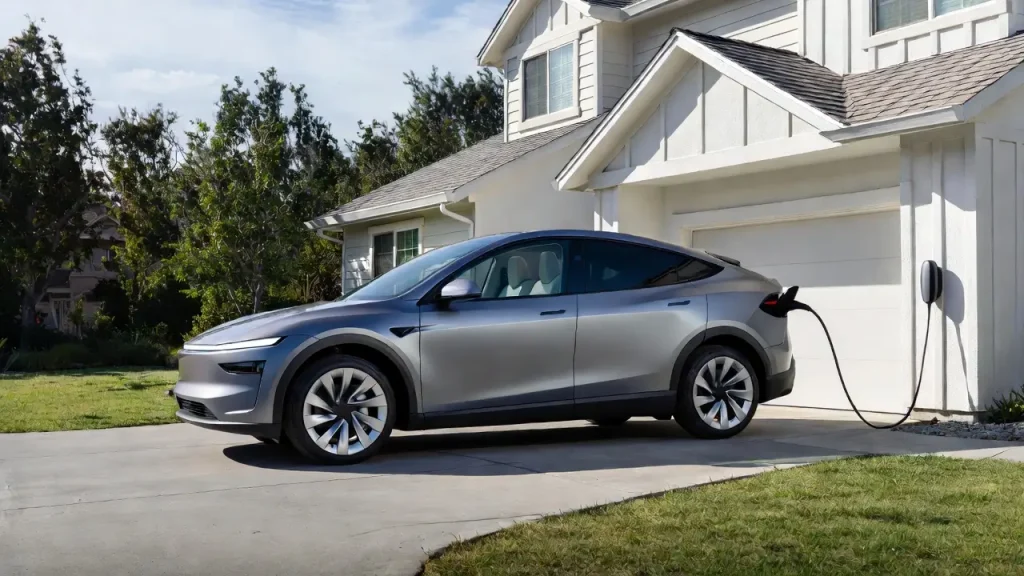
Home charging solutions will be more intelligent and less power-consuming.
Grid-to-vehicle tech will allow for energy-sharing.
Cooperation between the public and private sectors will lead to the coverage of charging stations all over the country.
There will be an acceleration in the charging infrastructure for apartments and offices.
Charging networks will have a common payment method.
User trust will be enhanced by the good quality and high availability.
Also Read: Best Affordable Family EVs USA 2026
Autonomous and Software Features
Software-defined architectures will be the main foundation of future electric vehicles.
The features will get better through the updates over the air, even after the initial purchase.
The driver assistance technology will greatly cut down the accidents.
The use of partial self-driving technology will be prevalent in all car segments.
The subscription-based features will probably be one of the ways to increase the revenue of the manufacturers.
The fight against cyber attacks will still be one of the main areas of development.
The interfaces will be more user-friendly with the integration of AI-powered voice assistants.
The connectivity of services will be a major factor in making the experience of owning a vehicle better.
Price Expectations for 2026–2030 EVs
The range of Affordable EVs under $30,000 will be larger.
Mid-range EVs will come with premium features but at much lower prices.
Luxury EVs may reach upwards of $100,000 for the most advanced technology.
Costs of batteries will come down and thus stabilize the pricing trends.
Besides, the second-hand EV markets will be developed in parallel with the new models being launched.
The extended warranty coverage will be a major factor in the buyer’s trust.
The overall cost of owning an electric car will be less than that of a gasoline car.
Car insurance will be modified according to the EV-specific risks.
Environmental Impact of Future EVs
There is a great reduction in emissions from the tailpipe of electric vehicles.
In addition, cleaner grids will contribute to the reduction of lifecycle emissions.
The recycling of batteries is going to be one of the most effective ways to minimize the environmental footprint.
Moreover, sustainable manufacturing practices are going to become more and more important.
The use of electric vehicles helps the country to be energy independent.
One of the urban problems solved is the reduction of noise pollution, which now benefits the city dwellers.
The electrification of fleets will be a major factor in the overall emissions of the commercial sector.
The long-term climate benefits are still going to be very significant.
Comparison Table: Future EV Segments
| Segment | Expected Range | Target Buyers | Key Advantage |
|---|---|---|---|
| Sedan | 350–450 miles | Commuters | Efficiency |
| SUV | 300–420 miles | Families | Space |
| Truck | 280–400 miles | Workers | Torque |
| Luxury | 350–500 miles | Premium buyers | Technology |
Comparison Table: Brand Focus Areas
| Brand | Main Focus | Price Range | Launch Period |
|---|---|---|---|
| Tesla | Software | Mid to Premium | 2026–2029 |
| Ford | Trucks | Affordable | 2026–2030 |
| GM | Scalability | Wide Range | 2026–2028 |
| Hyundai | Fast Charging | Affordable | 2026–2027 |
Key Points Summary
In the future, electric vehicles will be a major factor in the growth of the US car market.
The modern battery will bring forth the best performance and cost-effectiveness.
There will be a variety of options throughout all vehicle classes.
Faster and better charging facilities will make consumers more confident.
Manufacturers will be at odds in terms of the software and the experience for users.
The price of the models for the general public will slowly be reduced.
The planet will also benefit more and more as people will be in favor of the eco-friendly option.
The period from 2026 to 2030 is going to be really good for electric vehicles.